The 3rd International Symposium on
Generative AI and Hyper Intelligence
(GAI-HyperI 2026)

2026 Theme: Beyond Generation


Held in conjunction with IEEE CyberSciTech 2026

November 9-13, 2026, Melbourne, Australia

Aim and Scope

Generative AI (GAI) is evolving beyond generation. Driven by rapid advances in large language models, multimodal and reasoning models, world models, and agentic AI, GAI is expanding from content generation toward reasoning, planning, action, and adaptation. New approaches to context, memory, knowledge, tools, skills, and loops are further extending these capabilities, enabling new systems and solutions across an expanding range of domains. Together, these developments are rapidly expanding what generative AI can do and where it can be applied.

Hyper Intelligence (HyperI) offers a broader vision of intelligence. HyperI explores how intelligence may emerge and evolve through hyper-connections, hyper-compositions, hyper-collaborations, and hyper-cognition among humans, machines, cyber entities, and environments. Examples include human-AI collective intelligence, collaborating AI agents and systems, and cyber-physical intelligence that interacts with and adapts to the real world. Since 2020, the IEEE Hyper-Intelligence Technical Committee (HITC) has promoted research and discussion toward Hyper Intelligence.

The trajectories of GAI and HyperI are increasingly converging. As GAI gains stronger capabilities in reasoning, creation, agency, and adaptation, it is becoming an important enabler of connected and collaborative intelligent systems. At the same time, HyperI provides broader contexts in which generative models, AI agents, humans, and intelligent systems can interact, collaborate, and augment one another. Their convergence opens new opportunities for research, system development, and real-world applications.

GAI-HyperI 2026 aims to bring together researchers and practitioners to share advances, ideas, and experiences in generative AI and Hyper Intelligence. Building on the previous two editions in 2024 and 2025, this edition continues to explore emerging advances and future frontiers of intelligence. The symposium welcomes original research, innovative methods, tools and systems, real-world applications, and forward-looking ideas that advance GAI, HyperI, or their convergence.

Topics of interest include, but are not limited to:
Generative AI (GAI)
  • Foundation, multimodal, reasoning, and efficient GAI models
  • World models, embodied simulation, and grounded intelligence
  • Test-time reasoning, reflection, verification, and self-improvement
  • Agentic AI: planning, memory, tools, skills, and loops
  • Context engineering, knowledge integration, and human-AI collaboration
  • AI co-scientists, autonomous experimentation, and personal agents
  • GAI infrastructure, orchestration, observability, and deployment
  • Interpretability, robustness, safety, privacy, and governance
Hyper-Intelligence (HyperI)
  • Hyper-connection, hyper-collaboration, and hyper-cognition
  • Collective, hybrid, swarm, and human-AI intelligence
  • Super-scale distributed intelligence and agentic ecosystems
  • Physical AI and embodied cyber-physical-social systems
  • Hyper-intelligent supersystems, self-organization, and system growth
  • General AI, idea generation, autonomous discovery, and creativity
  • HyperI applications in science, medicine, education, and industry
  • Ethics, risks, security, controllability, and sovereignty

Submission and Publication

Authors should follow the submission guidelines on the IEEE CyberSciTech 2026 website and submit their papers through EDAS. Research and Application Papers should be 4–6 pages, including figures and references.
Position and Vision Papers should be 2–4 pages. They may present novel ideas, emerging concepts, hypotheses, or forward-looking research directions related to Generative AI, Hyper Intelligence, or their convergence, and will be peer-reviewed for novelty and potential impact.
All submissions must follow the IEEE Computer Society Proceedings format. At least one author of each accepted paper must register and present the paper, either in person or virtually. Accepted papers are to be included in the IEEE Computer Society conference proceedings (Download CFP).

HAI-Q: Hyper/Super AI Questions Initiative

HAI-Q is an open forum of GAI-HyperI 2026 that invites forward-looking questions on the future of Hyper/Super AI. Submitted questions will be analyzed, consolidated, and ranked to identify a set of top questions for discussion in a dedicated panel session at the symposium. Questions may be submitted through the online Google Form by September 30, 2026. See the HAI-Q website for details.

Important Dates

All deadlines are in the Anywhere on Earth timezone.

Submission Deadline: August 15, 2026
Author Notification: September 1, 2026
Paper Registration Due: September 24, 2026
Camera-Ready Submission: October 1, 2026

Organizers


General Chair
180x180

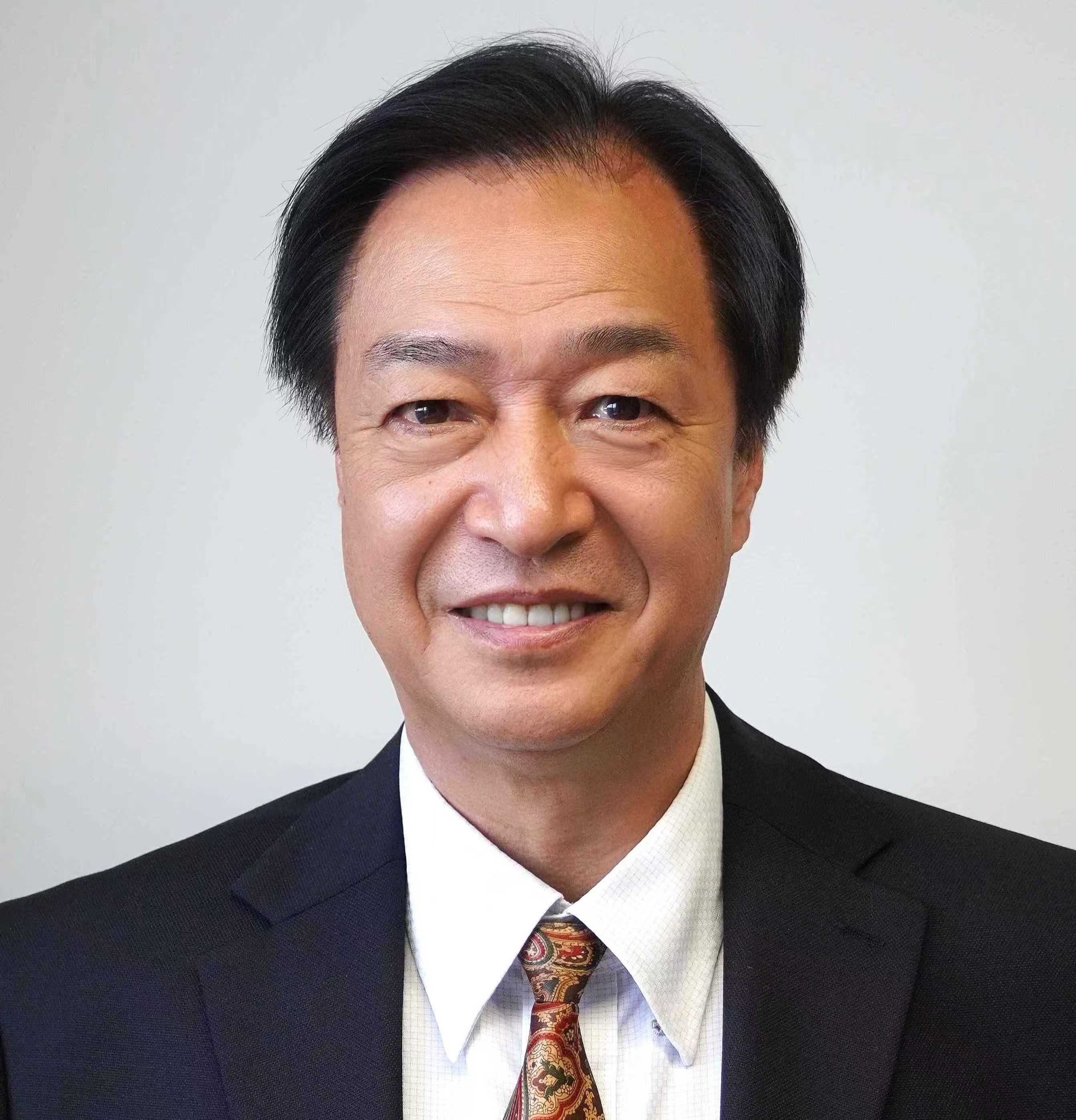
Jianhua Ma

jianhua@hosei.ac.jp
(Hosei University, Japan)

Program Chair

180x180

Ao Guo

guo@i.nagoya-u.ac.jp
(Nagoya University, Japan)
Supported by


170×64
226×64
170×64
170×64